philg.uk Intel 8051 / 8052 / BASIC-52 stash:
(not much to see as yet - only built the 8052 board yesterday)I used an Atmel AT89C52 from ebay, with Elektor's version 1.31 of BASIC-52.
The PCB is by Dennou Densetsu from Japan, gerber link is below.
Right-click & open in a new tab for full-size pic:
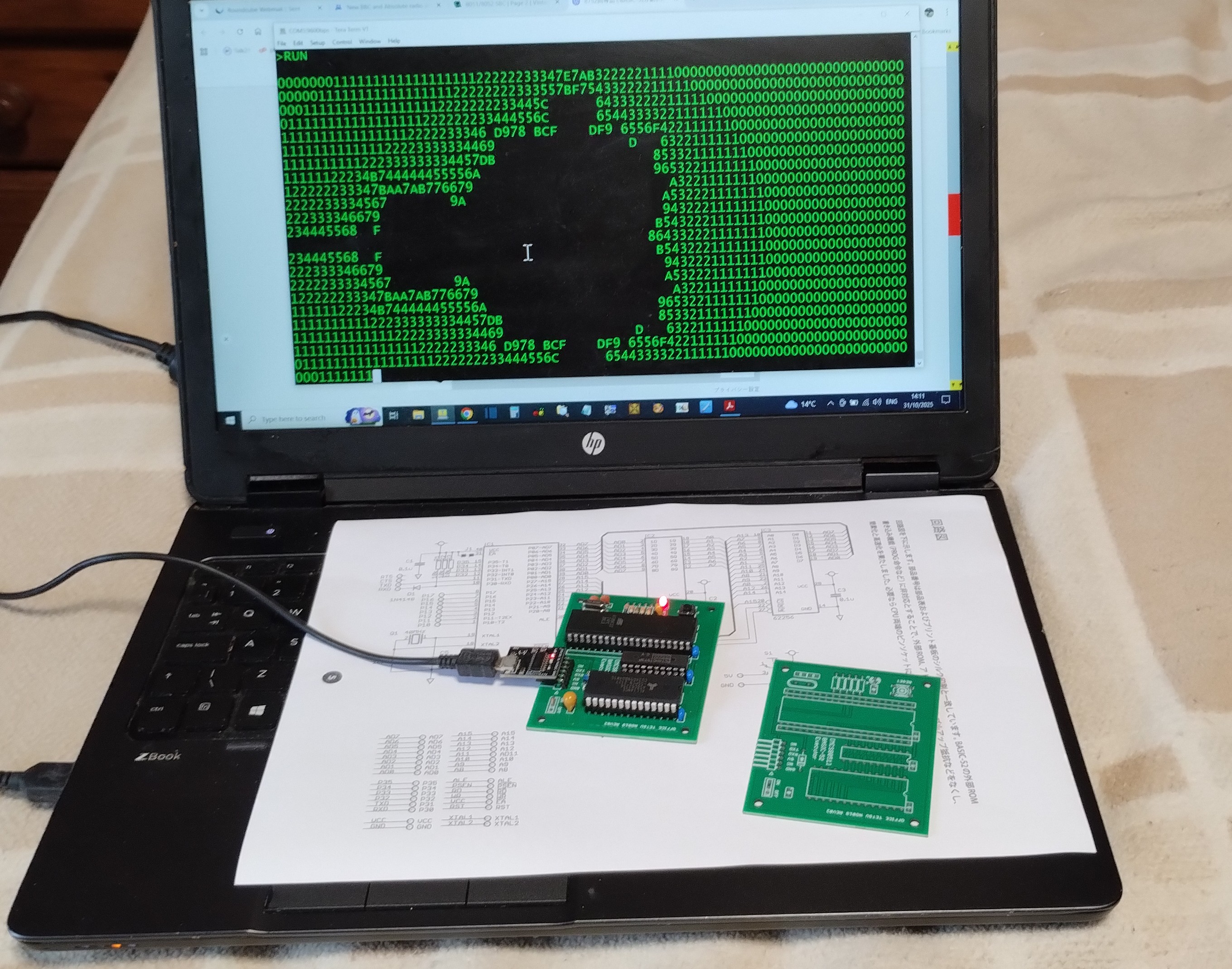
The BASIC-52 board driving a servo:
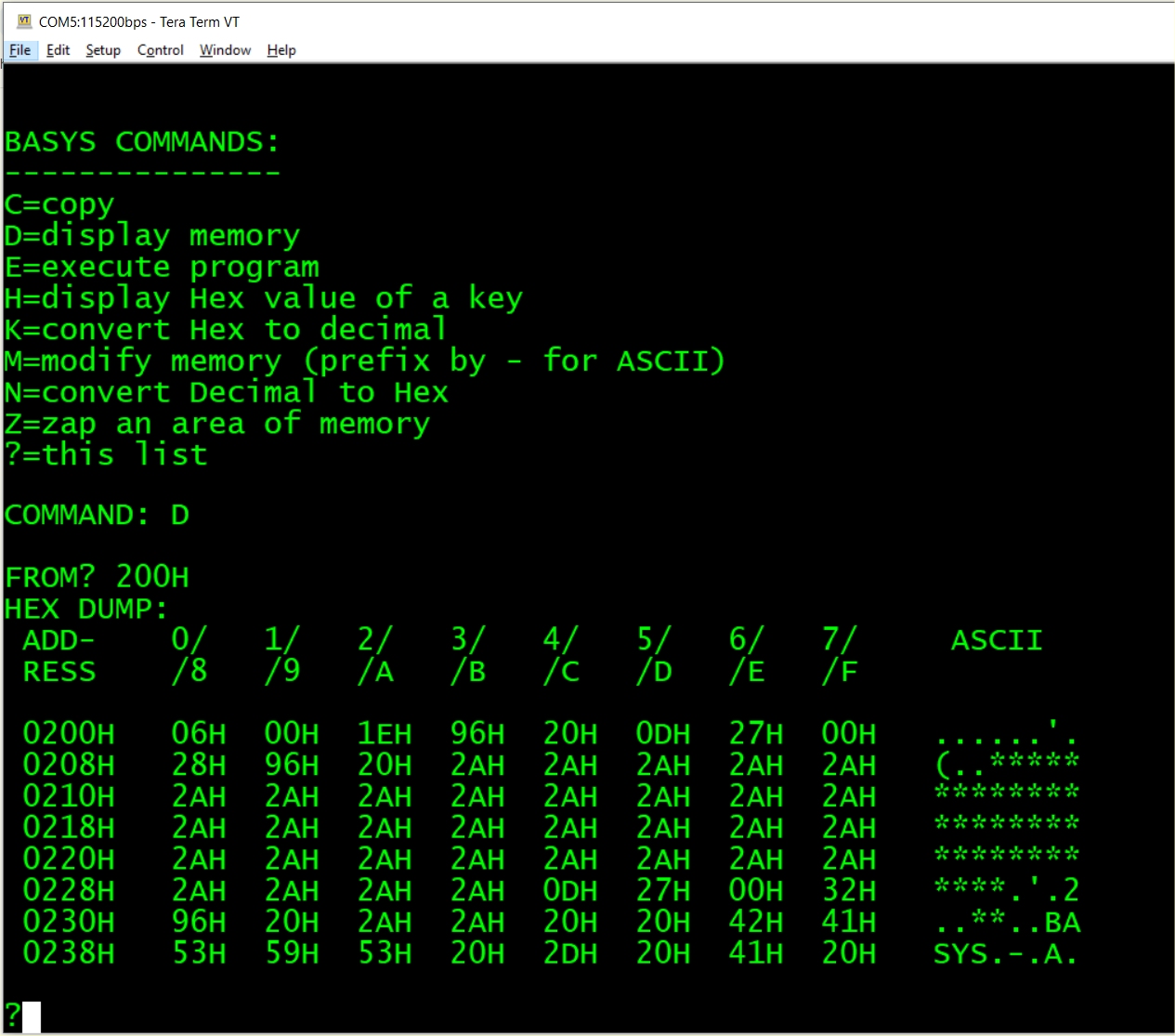
Here's my BASYS monitor which has been adapted to many different BASICs, this time for the BASIC-52 board.
Note that the code/data memory mod is necessary for the 'E' command to run machine-code programs in RAM.(without the mod its Harvard architecture prevents us from running code in data memory)
Modifications:
Ths is a Harvard architecture chip and so code and data normally have totally separate memory maps.
The BASYS monitor allows you to display and edit data memory, but this is separate from code memory.
This means that as standard, the Densetsu PCB cant run code in RAM. Martin has come up with a very simple
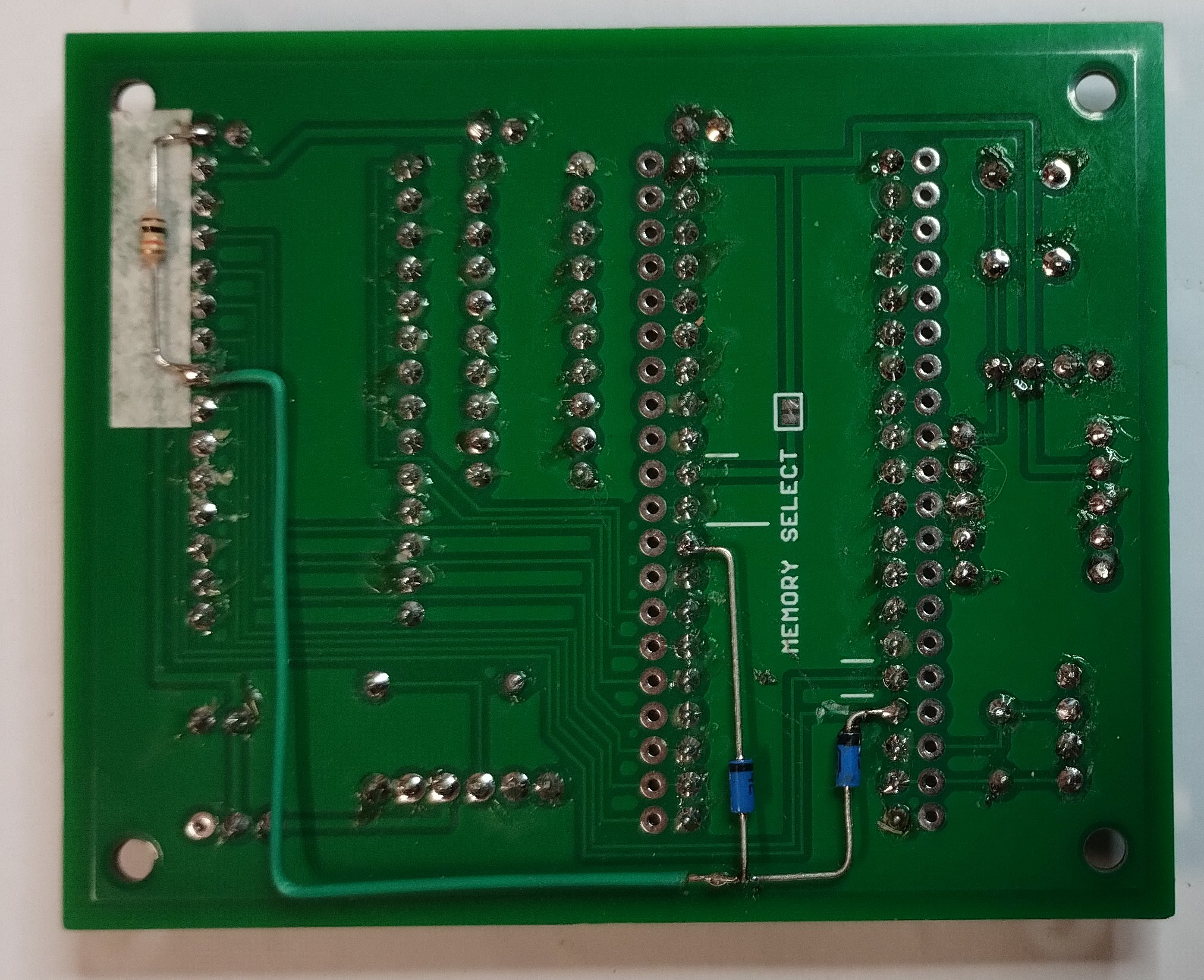
OR arrangement using 2 schottky diodes that enables the RAM chip for both code and data.
Theres a 10k pull-up on the static RAM's /OE and the cathode of each diode goes to AT89C52 pins 17 and 29 (/RD and /PSEN).
Anodes are commoned to /OE on the RAM chip with the new pull-up (SRAM pin 22):
Now the whole of the 32k is accessible as data for BASIC52 programs, whilst simultaneously 2000h to 7FFFh
is available for code. Gert kindly modified the BASYS E command such that within the code area it works as you'd expect.
MTOP can be reduced to reserve code memory to keep a block of code safe from BASIC52.
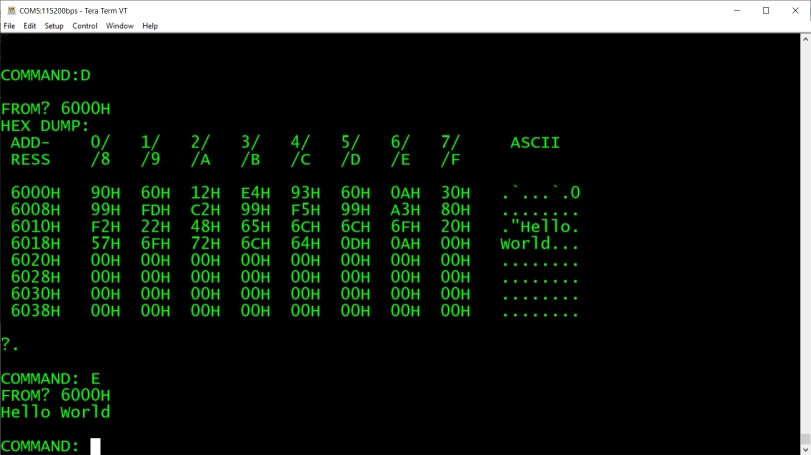
Here's a simple demo program, a 'Hello World' written in 8051 assembler:
Hello World
Download the BASYS monitor (set Teraterm character delay to 10 and line delay to 500):
BASYS.B52
Download BASIC-52 version 1.31:
BASIC-52 v1.31
The BASIC-52 Manual:
BASIC-52 Users Manual Nov 1986
8052 PCB by Dennou Densetsu:
VCF forum thread 8051/8052 SBC
...and the associated schematic:
MCS8051R2.pdf
Demo - using a timer interrupt to blink an LED on port 1:
int_led.b52
Ron's excellent 8031 page:
https://www.dos4ever.com/8031board/8031board.html
Mandelbrot demonstration:
mandelbrot.b52
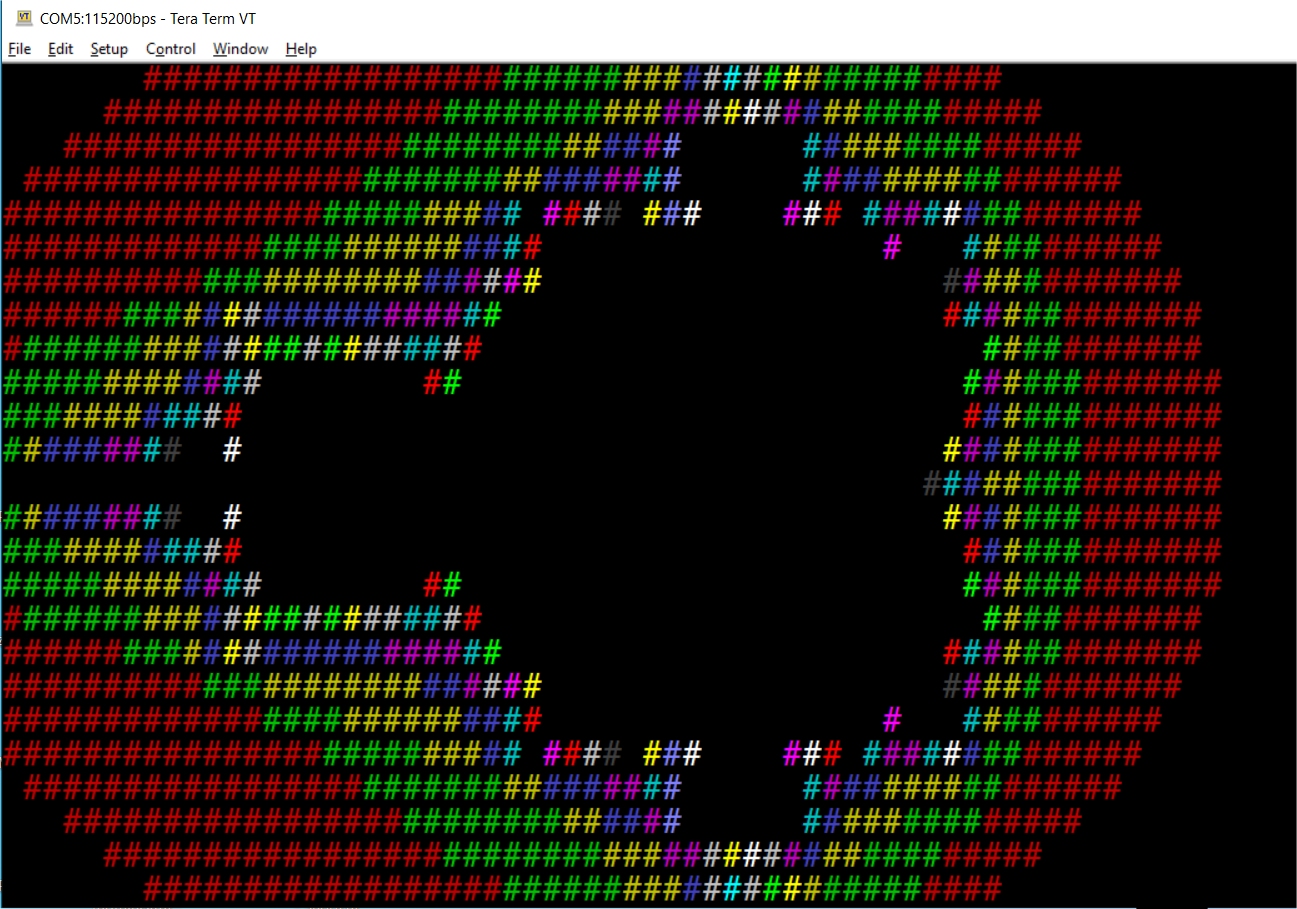
...and Mandelbrot in colour:
colour_mandelbrot.b52